3.1 General health and mortality
| Men | Women | |
|---|---|---|
| life expectancy at birth in years (2017) | 81.4 | 85.4 |
| healthy life expectancy at birth in years (2017) | 69.8 | 70.8 |
| (very) good self-perceived health1 (2017) | 85.9% | 83.5% |
| long-standing health problem1 (2017) | 30.5% | 34.7% |
| total deaths (2016) | 31 283 | 33 681 |
| cardiovascular diseases | 9 357 | 11 355 |
| cancer | 9 371 | 7 830 |
| dementia | 1 789 | 3 975 |
| accidents | 1 329 | 1 223 |
1 population aged 15 or over living in a private household
Sources: FSO – SHS. BEVNAT. STATPOP. CoD
© FSO 2019
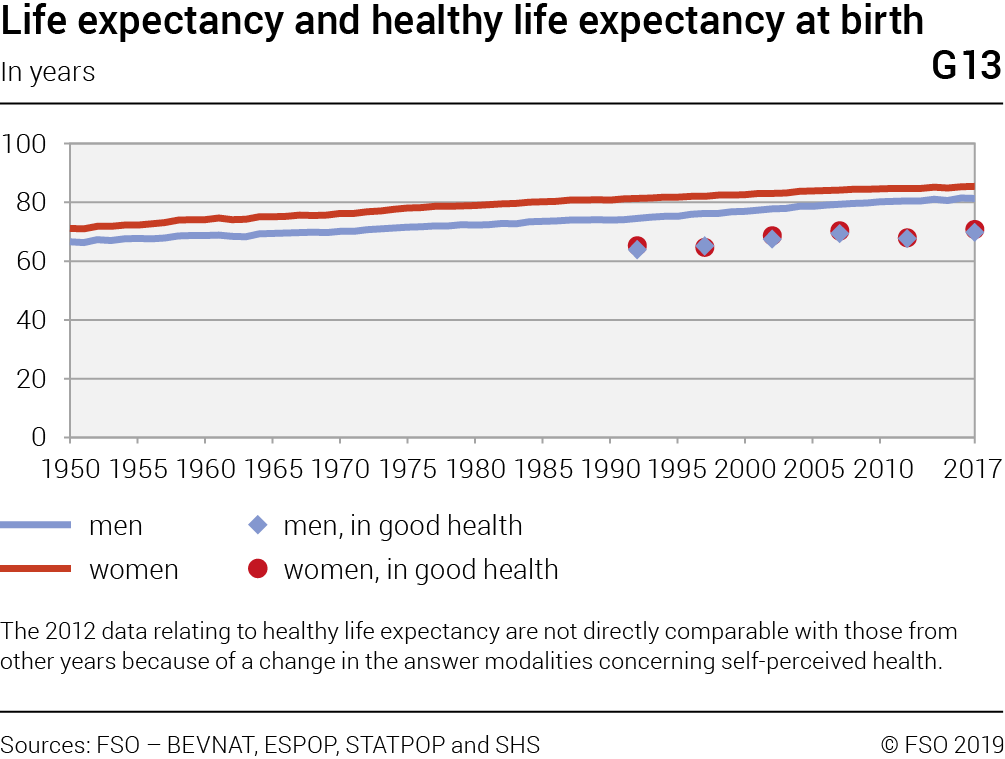
Since 1990, life expectancy at birth has increased by 7.4 years among men and by 4.6 years among women. It is among the highest world- wide. Healthy life expectancy is around 70 years. It takes into account self-perceived health and the difference between men and women is slight.
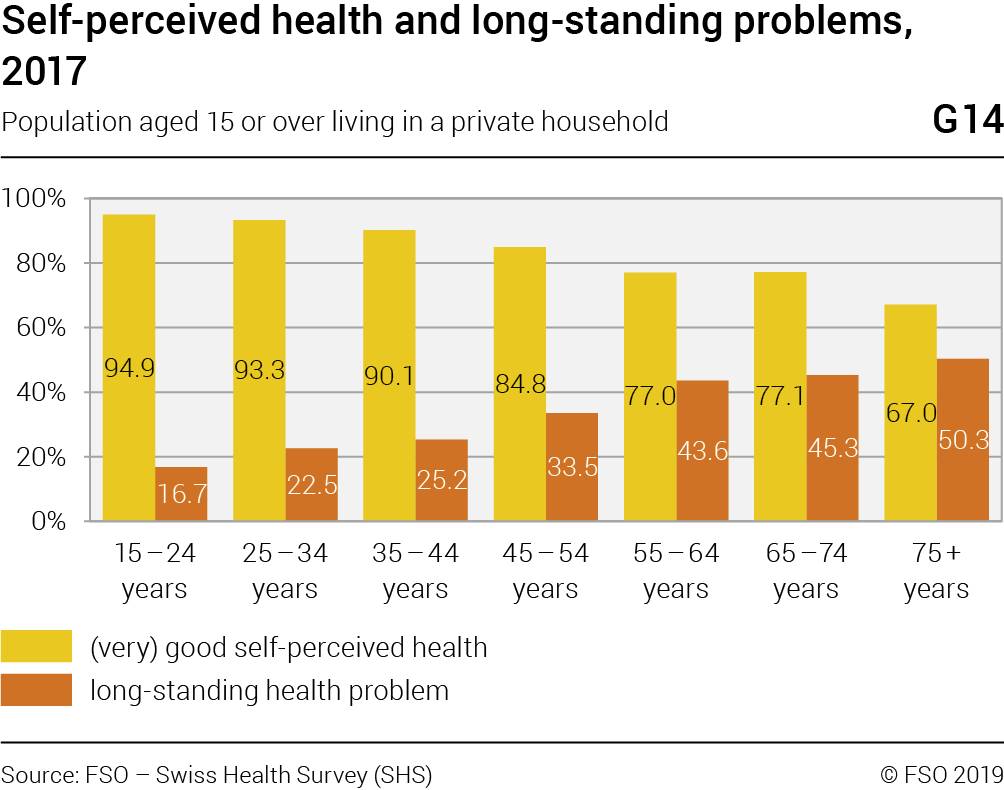
86% of men and 84% of women assessed their state of health as good or very good. The share of persons suffering from chronic health problems increases threefold between the youngest age class and the oldest.
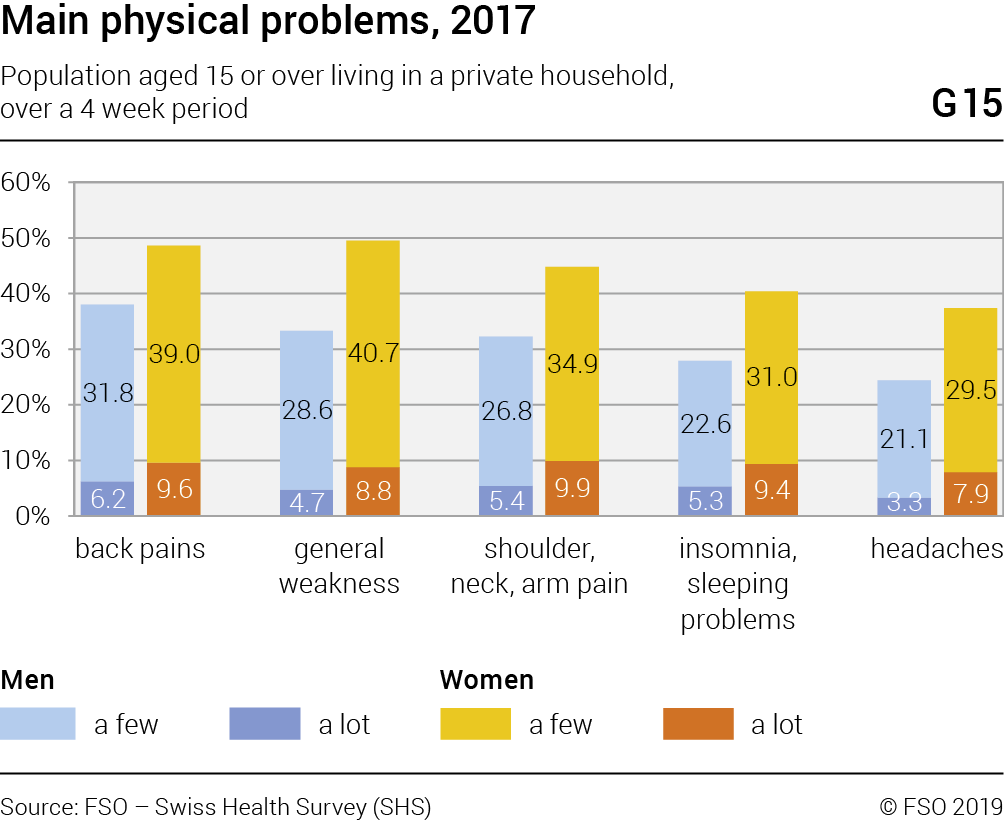
Back pains and a feeling of general weakness are the two most common physical problems: two in five people suffer from these.
The graph shows the respective importance of causes of death by age group. Congenital diseases are the main cause of death until the age of 2. Between 2 and 15 years, the very rare cases of death are spread between a number of causes. Accidents and suicides predominate among adolescents and young people aged 16 and over. Cancer is the main cause of death among women aged over 30 and among men over the age of 40. It is superseded by cardiovascular diseases from around the age of 80.

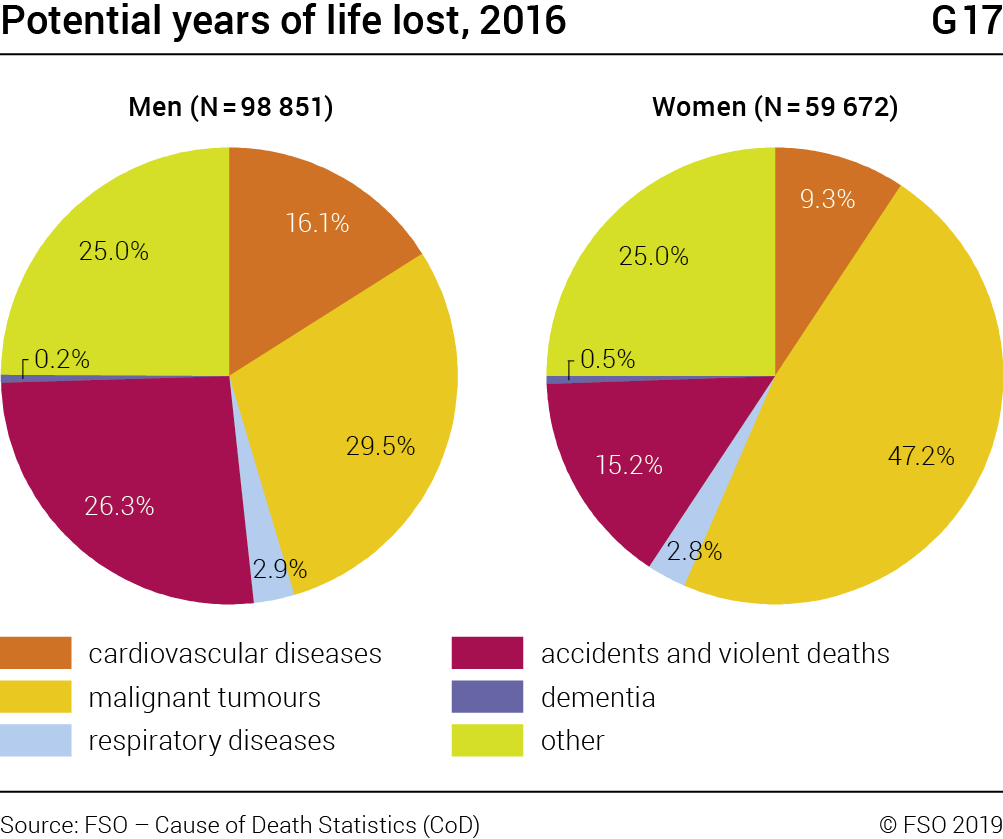
Cancer is the biggest cause of premature mortality (before the age of 70): it is responsible for 30% of potential years of life lost (PYLL) among men and 47% among women. Accidents and violent deaths are the second cause of premature mortality. Standardised mortality rates have fallen by more than 50% since 1970. They have fallen by more than seven tenths for cardiovascular diseases and by almost two fifths for cancer.

3.2 Cardiovascular diseases and diabetes
| Men | Women | |
|---|---|---|
| number of hospitalisations for cardiovascular diseases (2016) | 64 278 | 49 934 |
| number of deaths due to cardiovascular diseases (2016) | 9 357 | 11 355 |
| acute myocardial infarction. number of cases (2016) | 9 757 | 5 035 |
| stroke. number of cases (2016) | 7 873 | 7 381 |
| hypertension1 (2017) | 19.2% | 16.0% |
| excessively high levels of cholesterol1 (2017) | 14.3% | 10.8% |
| diabetes1 (2017) | 5.4% | 3.5% |
1 population aged 15 or over living in a private household
Sources: FSO – MS. CoD. SHS
© FSO 2019
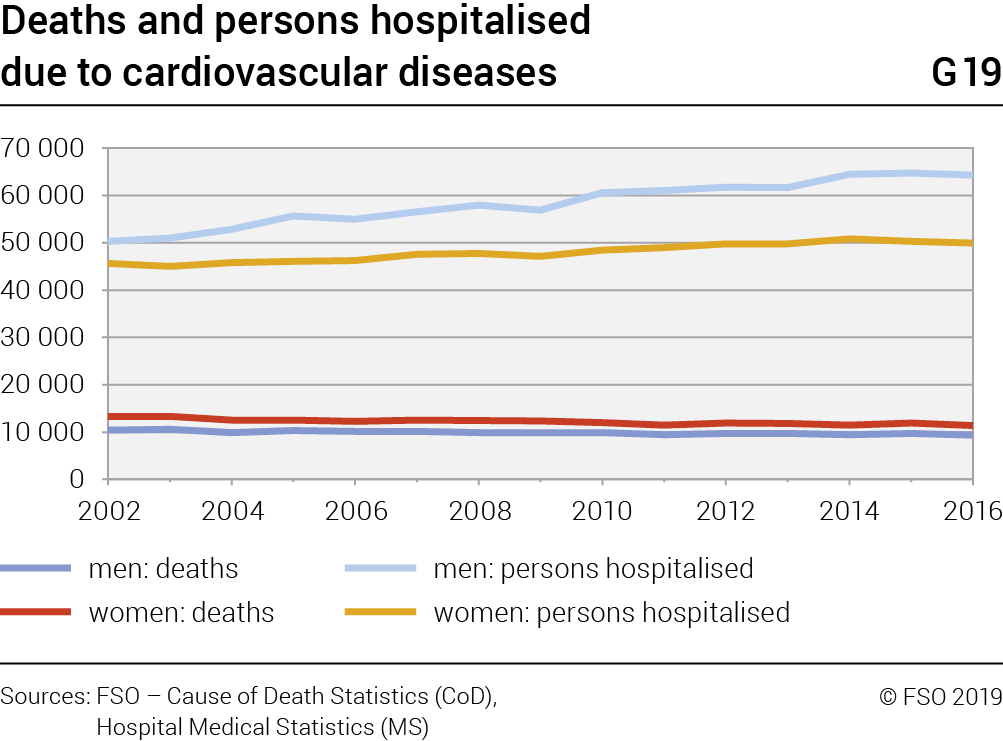
Cardiovascular diseases are the first most common cause of death and the third most common cause of hospitalisation. Since 2002, the number of hospitalisations for cardiovascular diseases has increased by 19% mainly as a result of increasing population numbers and an ageing population. Over the same period, the number of deaths caused by these illnesses however has fallen by 13%. In 2016, 14 792 people (two thirds of whom were men) suffered an acute myocardial infarction and 2166 people died from this. The respective numbers for strokes are 15 254 (slightly over half of which are men) and 2771.
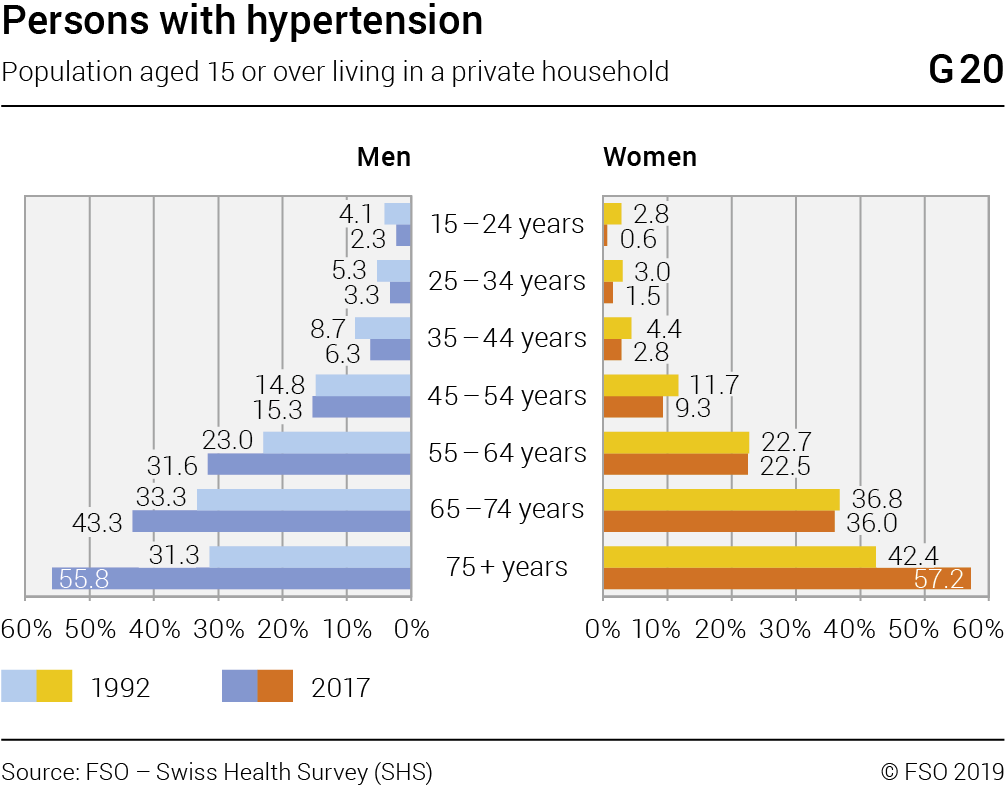
The share of persons suffering from hypertension increased from 14% to 18% between 1992 and 2017. The share of persons with excessively high levels of cholesterol increased from 9% in 2002 to 13% in 2017.
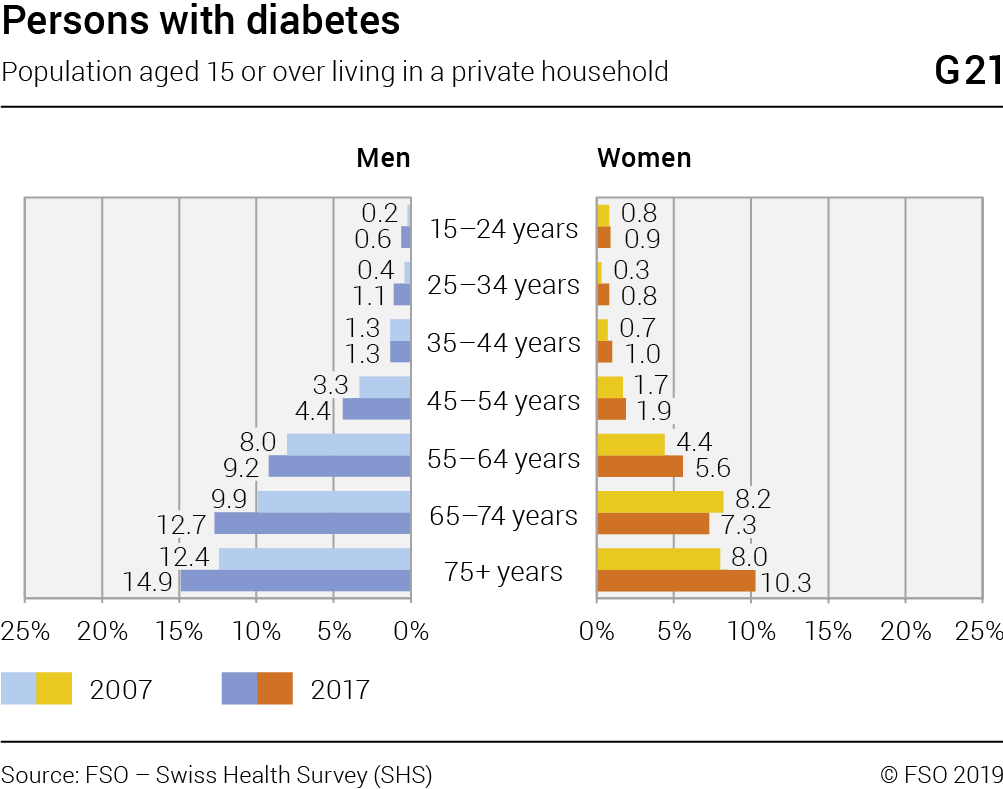
In 2017, 5% of men suffered from diabetes compared with just over 4% in 2007. Among women, the percentage has not changed in 10 years (3%). Persons with a low level of educational attainment are twice as likely to suffer from diabetes as those with a tertiary level education (8% compared with 4%).
3.3 Cancer
| 2011–20151 | Men | Women | ||
|---|---|---|---|---|
| New cases | Deaths | New cases | Deaths | |
| all cancers | 21 813 | 9 259 | 18 711 | 7 471 |
| lung. bronchi. trachea | 2 589 | 2 003 | 1 663 | 1 174 |
| breast | 5 994 | 1 366 | ||
| prostate | 6 069 | 1 337 | ||
| colon-rectum | 2 405 | 935 | 1 892 | 757 |
| melanoma | 1 429 | 197 | 1 275 | 131 |
| cancer among children2 (all types) | 117 | 16 | 93 | 10 |
1 annual average for the period
2 0 – 14 years
Source: FSO. NICER. CCR. SCCR – National Cancer Statistics
© FSO 2019
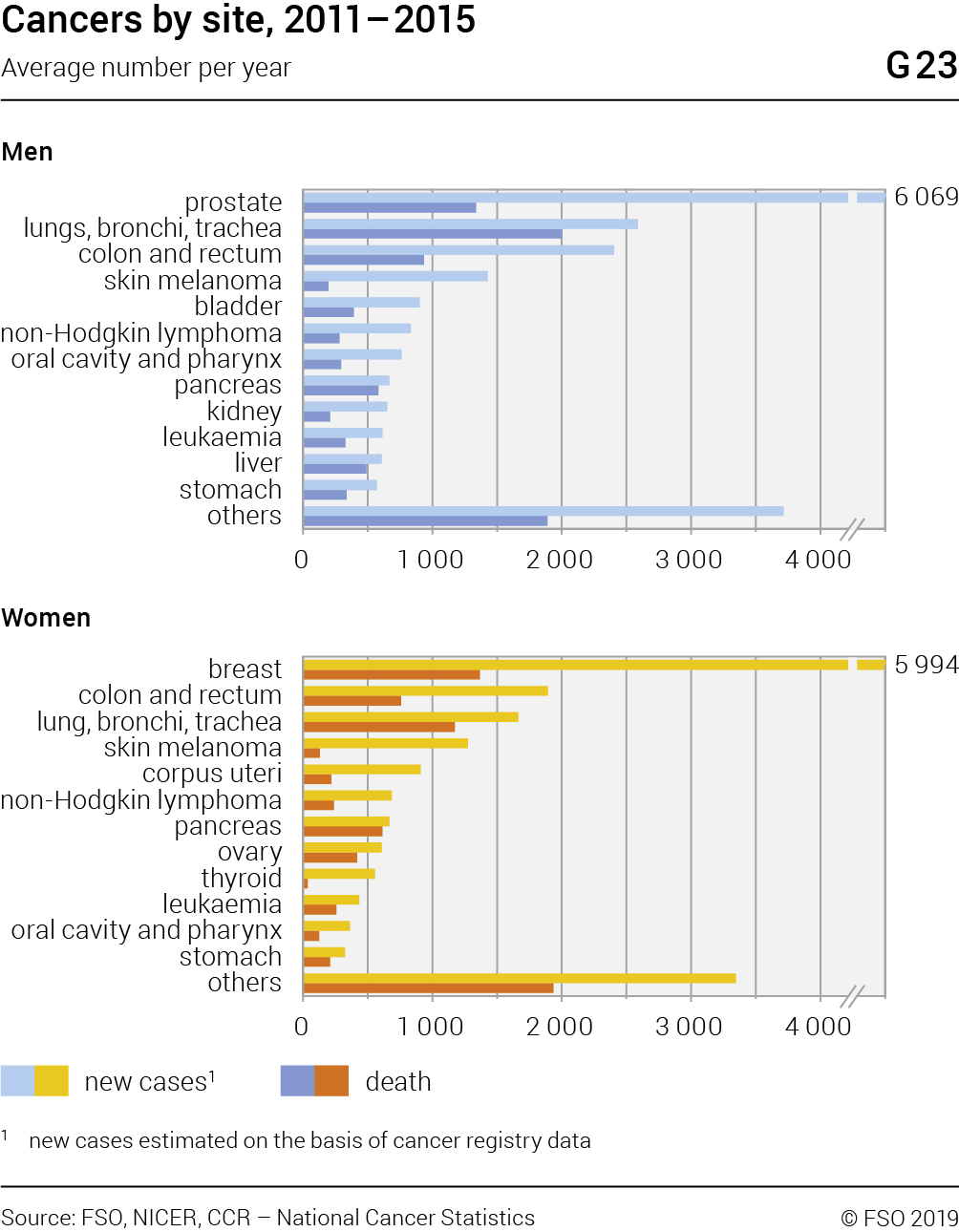
More than 40 000 new cases of cancer are diagnosed every year. More than one in five will develop a cancer before the age of 70. The rate of new cases has remained relatively stable among women since the mid-1990s. After increasing among men, it has fallen since the penultimate period. Mortality is declining. Prostate cancer is the most common cancer among men while breast cancer is the most common cancer among women.
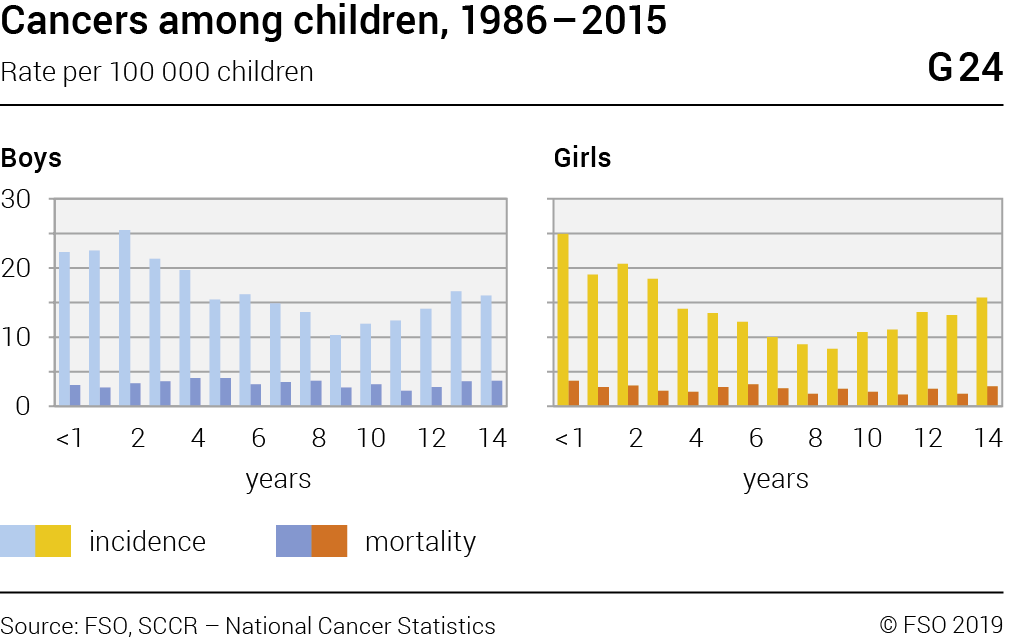
Every year, about 210 children aged 14 and under get cancer and about 26 die from this disease. Leukaemia (32%) and tumours of the central nervous system (23%) are the most common types of cancer in children.

3.4 Musculoskeletal disorders
| 2017 | Men | Women |
|---|---|---|
| persons hospitalised for musculoskeletal disorders | 69 931 | 84 706 |
| hip replacement | 11 160 | 13 777 |
| knee prosthesis | 8 270 | 12 139 |
Source: FSO – Hospital Medical Statistics (MS)
© FSO 2019
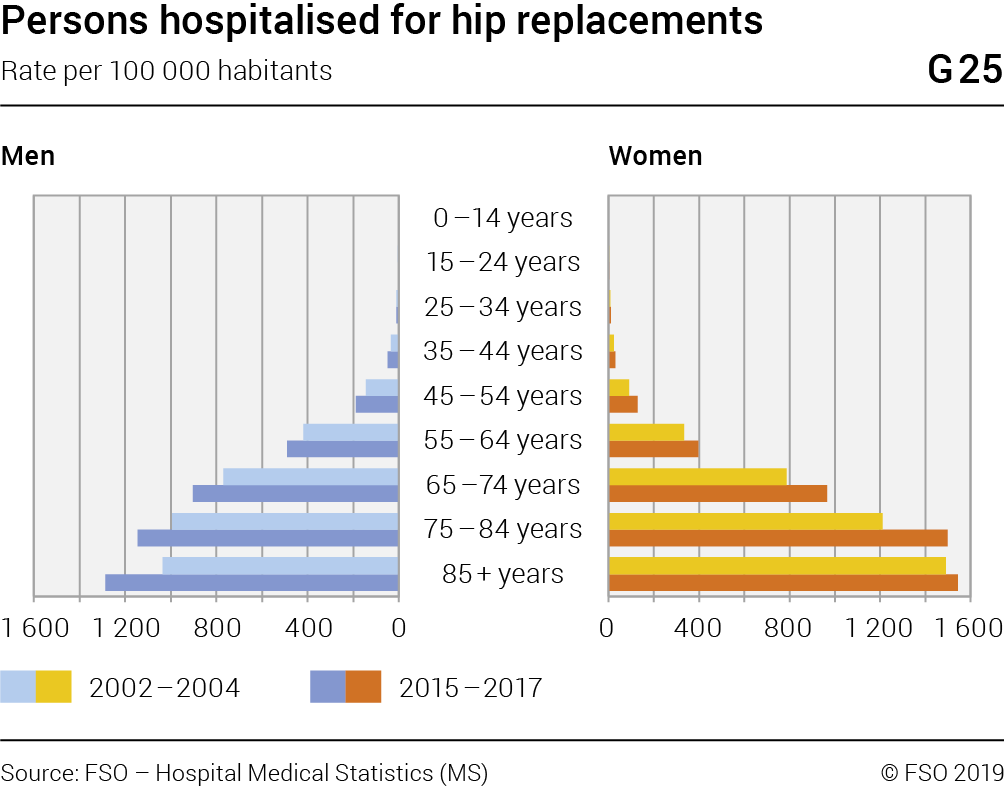
Musculoskeletal disorders are the second most common cause for hospitalisation, after accidents. Disorders of the limb joints (osteoarthritis, arthritis) and back problems are the reasons for 55% and 22% of hospitalisations for musculoskeletal disorders. The use of prostheses is sometimes necessary. In 2017, 24 937 persons were hospitalised for hip replacements. This is 63% more than in 2002. Knee prostheses are less common (20 409).
3.5 Infectious diseases
| 2017 | |
|---|---|
| new diagnoses of HIV | 445 |
| rates of new HIV diagnoses per 100 000 inhabitants | 5.3 |
| new cases of tuberculosis | 554 |
| rates of new cases of tuberculosis per 100 000 inhabitants | 6.6 |
Source: FOPH – Reporting System for Notifiable Infectious Diseases
© FSO 2019
The number of new diagnoses with the HIV virus has fallen since 2009. It had already fallen considerably during the 1990s. 42% of new diagnoses in 2017 concerned men who had sexual relations with men.
Since the 1980s, the number of new cases of tuberculosis has been divided by 2.5. However, it has not decreased since 2005 and now fluctuates between 500 and 600 cases per year. Seven in ten cases are found among persons of foreign origin.

3.6 Mental health
| Men | Women | |
|---|---|---|
| medium or high psychological distress1 (2017) | 11.7% | 18.3% |
| major depression1 (2017) | 7.8% | 9.5% |
| treatment for psychological problems1 (2017) | 4.4% | 7.7% |
| suicides. excluding assisted suicide (2016) | 759 | 257 |
1 population aged 15 or over living in a private household
Sources: FSO – SHS. CoD
© FSO 2019
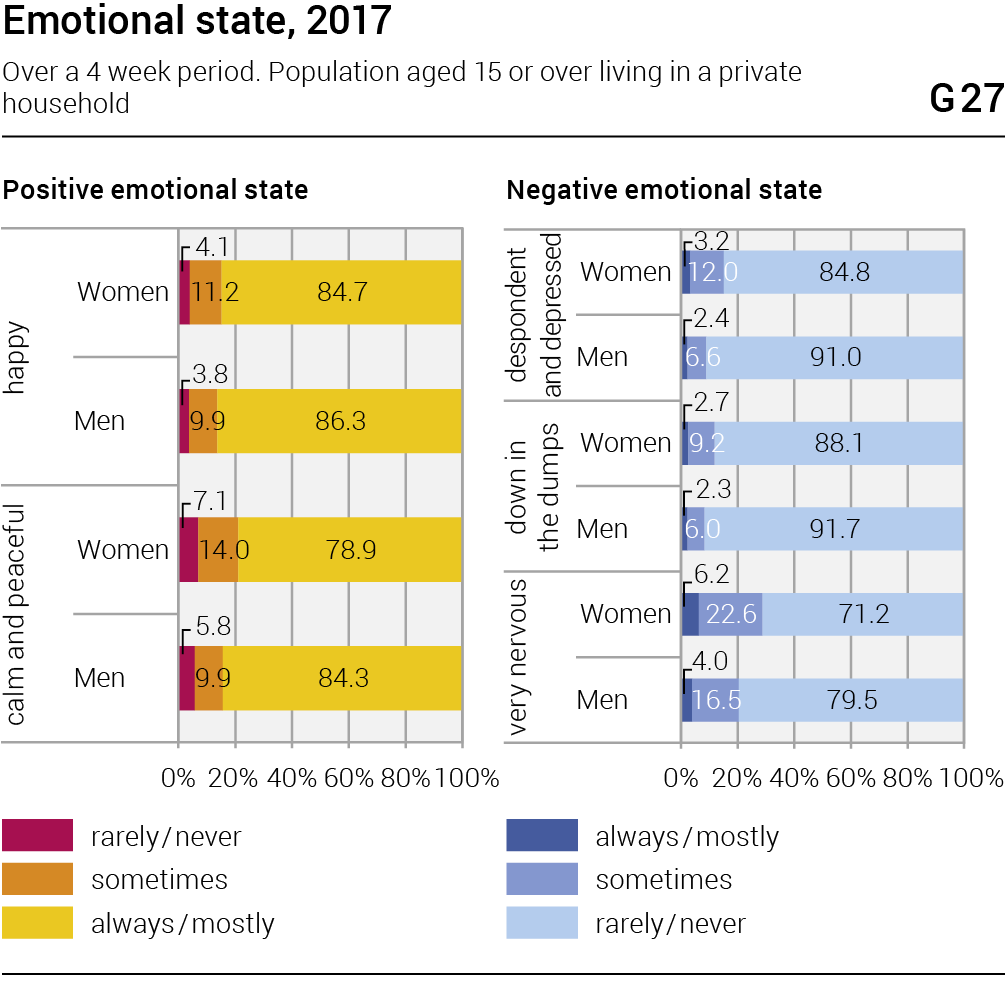
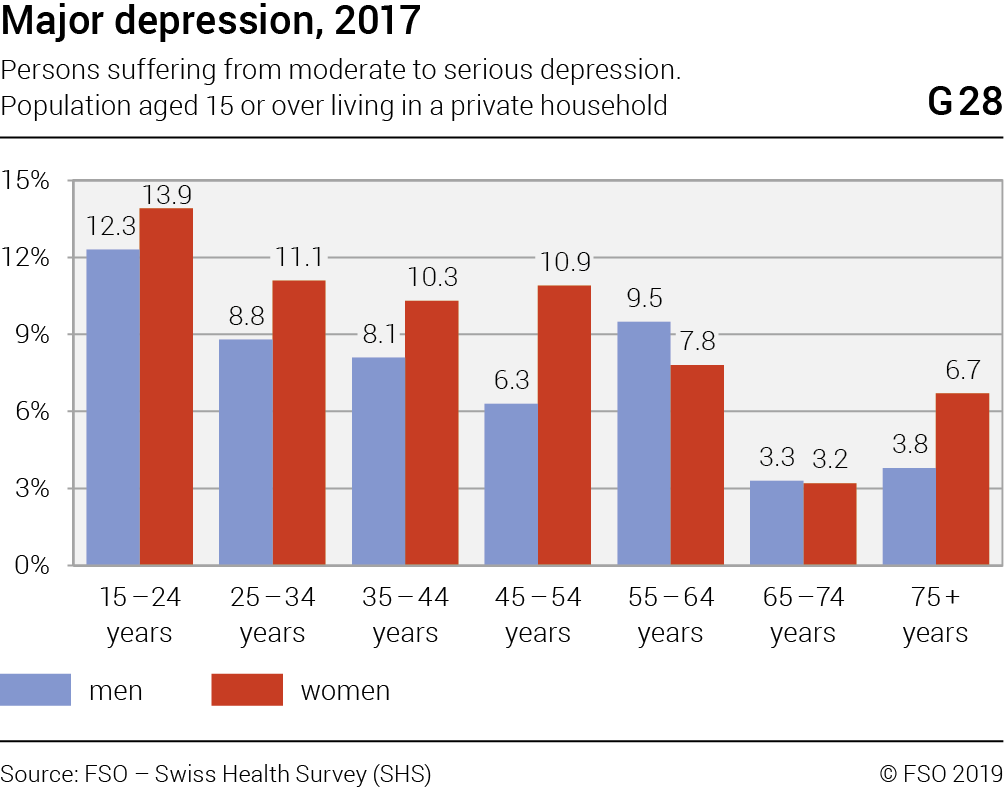
The vast majority of the population experience positive emotions far more often than negative emotions. 15% of the population, however, show signs of medium (11%) or high psychological distress (4%). Depression is the most common mental disorder. 8% of men and 10% of women suffered from major depression in 2017. The share of persons affected tends to decrease with age.
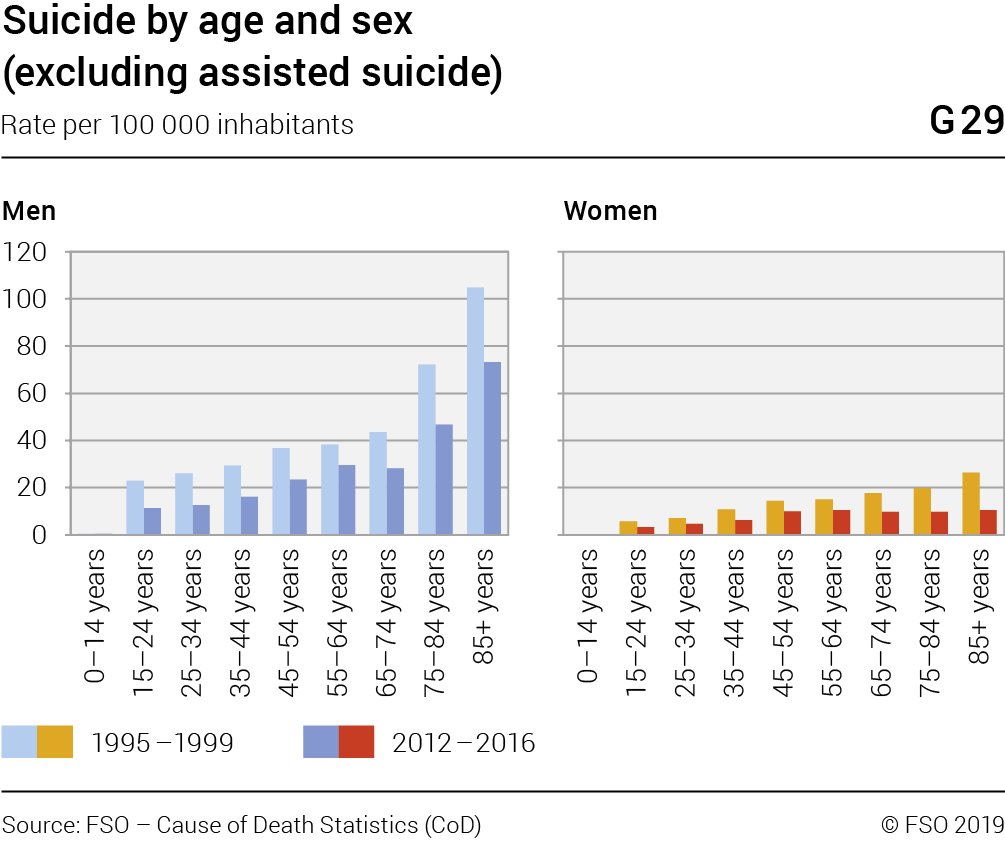
1016 people (75% of whom men) committed suicide in 2016, excluding cases of assisted suicide. The standardised suicide rate has fallen by two fifths since 1995. The suicide rate increases considerably with age among men. If a concomitant disease is indicated when suicide is announced, depression is involved 6 times out of 10.
3.7 Disabilities
| % | Persons | |
|---|---|---|
| eyesight: considerable or full impairment1 (2017) | 1.1 | 77 000 |
| hearing: considerable or full impairment1 (2017) | 1.1 | 78 000 |
| locomotion: cannot walk or can only walk a few steps1 (2017) | 1.0 | 67 000 |
| speech: considerable or full impairment1 (2017) | 0.4 | 28 000 |
| persons with disabilities1 (2017) | 18.0 | 1 264 000 |
| severely limited | 4.1 | 285 000 |
| recipients of disability pensions (AI) (31.12.2017) | 218 700 |
1 population aged 15 or over in a private household
Sources: FSO – SHS; FSIO – AI Statistics
© FSO 2019
Functional limitations increase considerably with age. Visual impairments affect some 77 000 persons, 35 000 of whom are aged 65 or over. Around 1 300 000 persons are considered to be disabled under the Disability Discrimination Act, of whom 300 000 are severely limited in activities people usually do.
3.8 Accidents
| Men | Women | |
|---|---|---|
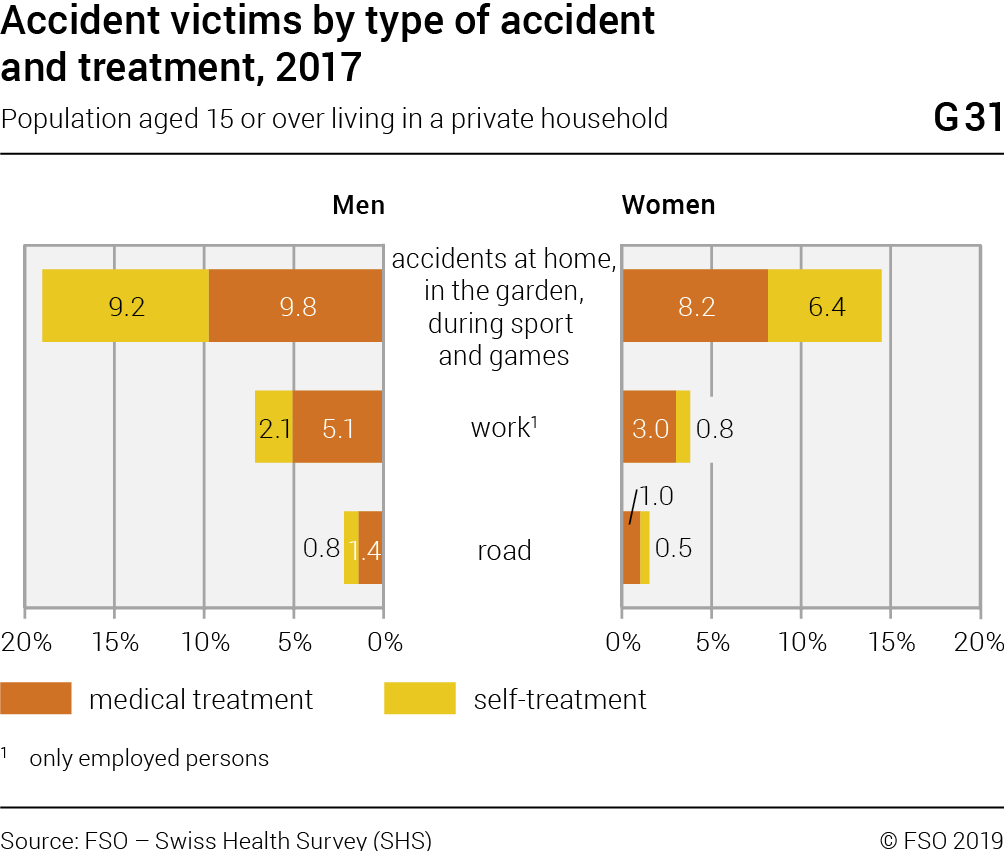
| accidents at home. in the garden. during sport and games1 (2017) | 19.0% | 14.5% |
| accidents at work2 (2017) | 7.2% | 3.8% |
| road accidents1 (2017) | 2.2% | 1.5% |
| deaths in road accidents (2017) | 163 | 67 |
1 population aged 15 or over living in a private household
2 economically active persons aged 15 and over
Sources: FSO – SHS. SVU
© FSO 2019
Accidents are one of the main causes of premature mortality and the first most common cause of hospitalisation. People most commonly experience accidents (often falls) at home, in the garden and during sports or games. Employed men are almost twice as likely as women to have accidents at work (7% compared with 4%). Almost 2% of the population have been involved in road accidents. In 2017, road accidents were responsible for 230 deaths, two thirds of these were men.
3.9 Births and health of newborns
| 2017 | |
|---|---|
| live births | |
| average age at maternity | |
| rate of caesareans | |
| premature births (< 37 completed weeks of pregnancy) | |
| low birth weight births (< 2 000 g) | |
| stillbirths | |
| infant mortality |
Sources: FSO – BEVNAT. MS. CoD
© FSO 2019
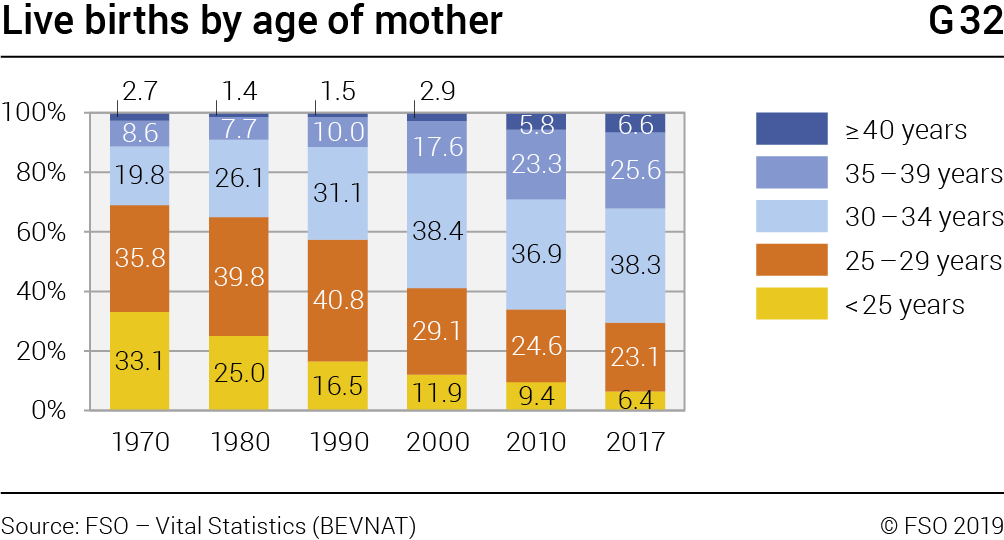
The average age of mothers at maternity has continued to increase since the 1970s. In 2017, the share of women under the age of 30 among those who had given birth was less than 30% compared with almost 70% in 1970. The increase in age at maternity may lead to a decrease in fertility and an increase in certain risks such as spontaneous twin pregnancies or chromosomal abnormalities.
96% of births take place at the hospital and a third of deliveries are by caesarean. The rate of caesareans can vary by twofold depending on the region.
310 infants under the age of one died in 2017. This corresponds to a rate of 3.5 deaths per thousand live births. More than half of these deaths occurred 24 hours following the birth. Above all infant deaths affect children with a very low birth weight or those born very prematurely. The same year 362 stillbirths were registered.