Crop production1
Thousands of tonnes
| 2007 | 2012 | 2017 p | |
|---|---|---|---|
| cereals | 1 012 | 950 | 975 |
| potatoes | 490 | 447 | 461 |
| sugar beet | 1 573 | 1 673 | 1 545 |
| vegetables | 313 | 396 | 427 |
| fruit and berries | 401 | 316 | 206 |
1 gross production minus losses in the field and on the farm
p provisional
Source: SFU – Crop production
© FSO 2019
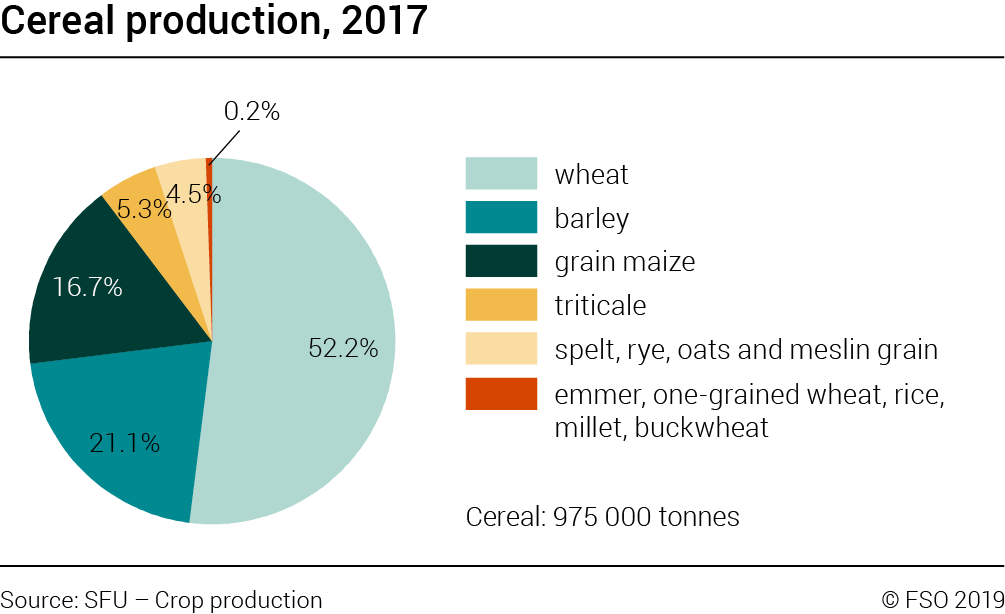
Several frosty nights in April 2017 caused damage to fruit, vineyards and vegetables. However, this did not have any detrimental impact on either the yield or the quality of the most important arable crops.
Total cereal production in 2017 reached around 975 000 tonnes. Wheat accounted for just more than half of the cereal yield. This was followed by barley and grain maize. Cereal may be used for diverse purposes whether for human consumption in the form of bread, pasta, rice, muesli or as animal food. It may also be used in the production of beer and starch and also as a seed.
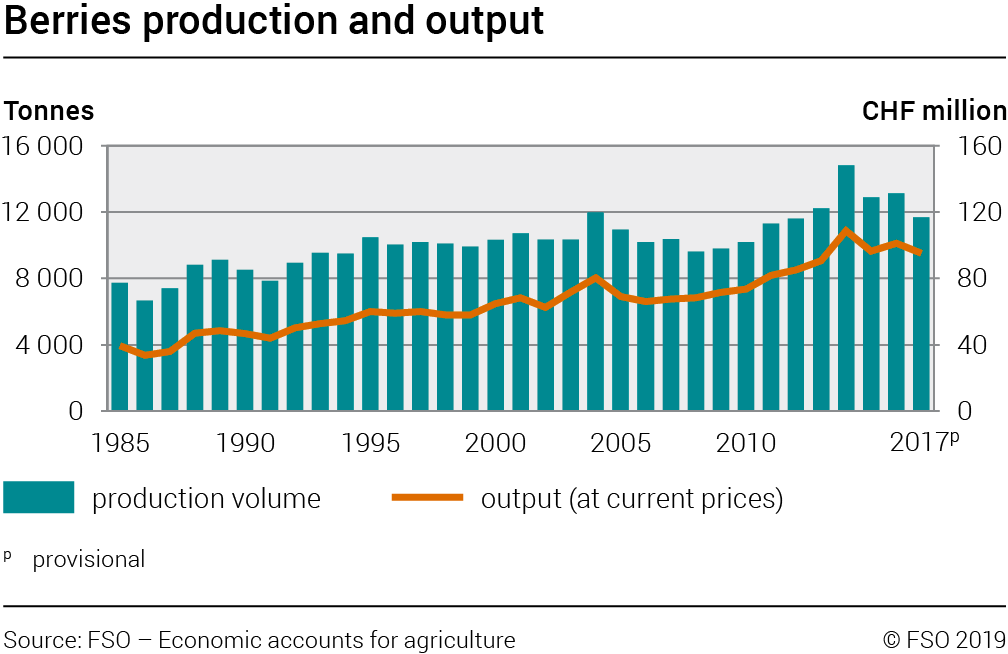
The cultivation of berries increased between 1985 and 2017. In 2017, around 7300 tonnes of strawberries and 4300 tonnes of raspberries and other berries were produced, representing a total output value of CHF 95 million.
Animal production1
Thousands of tonnes
| 2007 | 2012 | 2017 p | |
|---|---|---|---|
| meat 2 | |||
| cattle | 133 | 144 | 139 |
| pigs | 242 | 243 | 239 |
| sheep | 5 | 5 | 5 |
| poultry | 60 | 76 | 91 |
| cow’s milk | 3 912 | 4 084 | 3 893 |
| hens’ eggs | 36 | 45 | 54 |
1 gross domestic production
2 usable output, carcass weight
p provisional
Source: SFU – Animal production
© FSO 2019
Meat production rose by 16% between 2000 and 2017. This development was particularly pronounced for poultry which almost doubled in production.
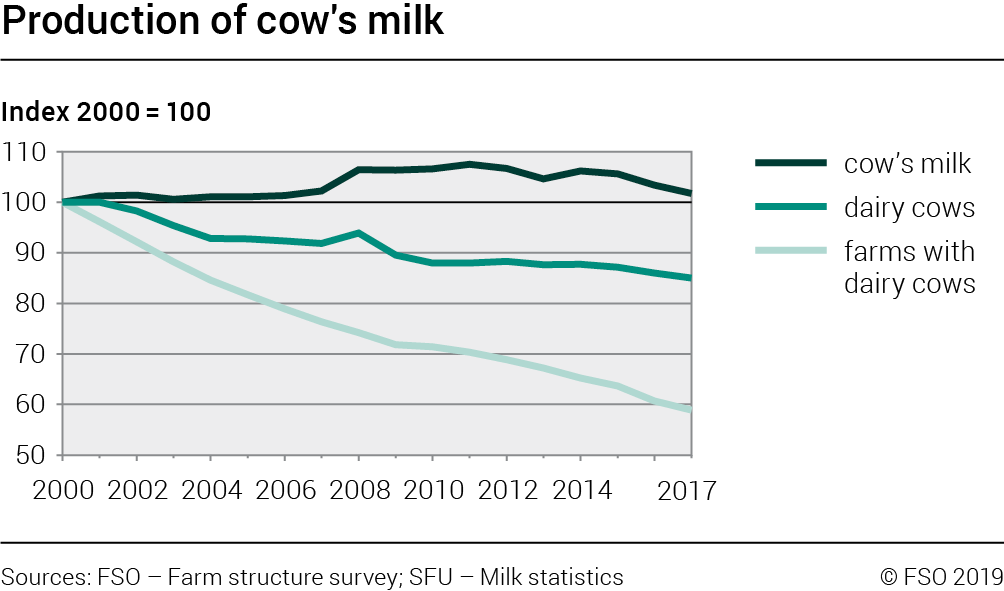
In 2017, almost 4 billion kg of milk was produced. The general decrease in the number of dairy cows and dairy farms also continued in 2017. In 2000, a dairy farm had on average 15 dairy cows. This figure increased to an average of 21 in 2017.
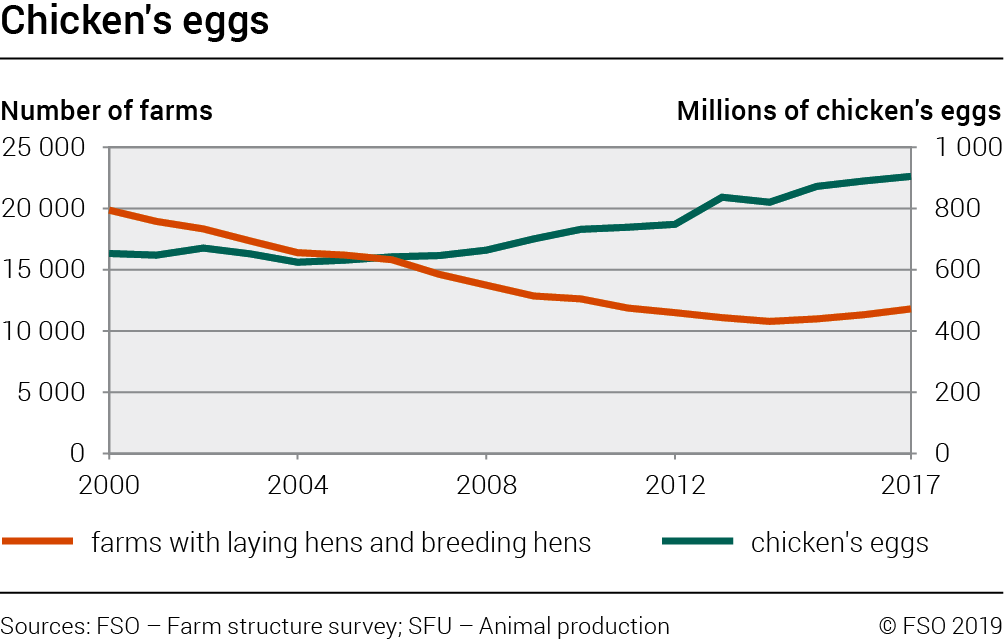
The production of eggs is a growing sector. In 2017, 11 800 farms – 16% of which were organic – had around 3.2 million laying hens and breeding hens. Between 2000 and 2017, the number of eggs produced increased by almost 40%.
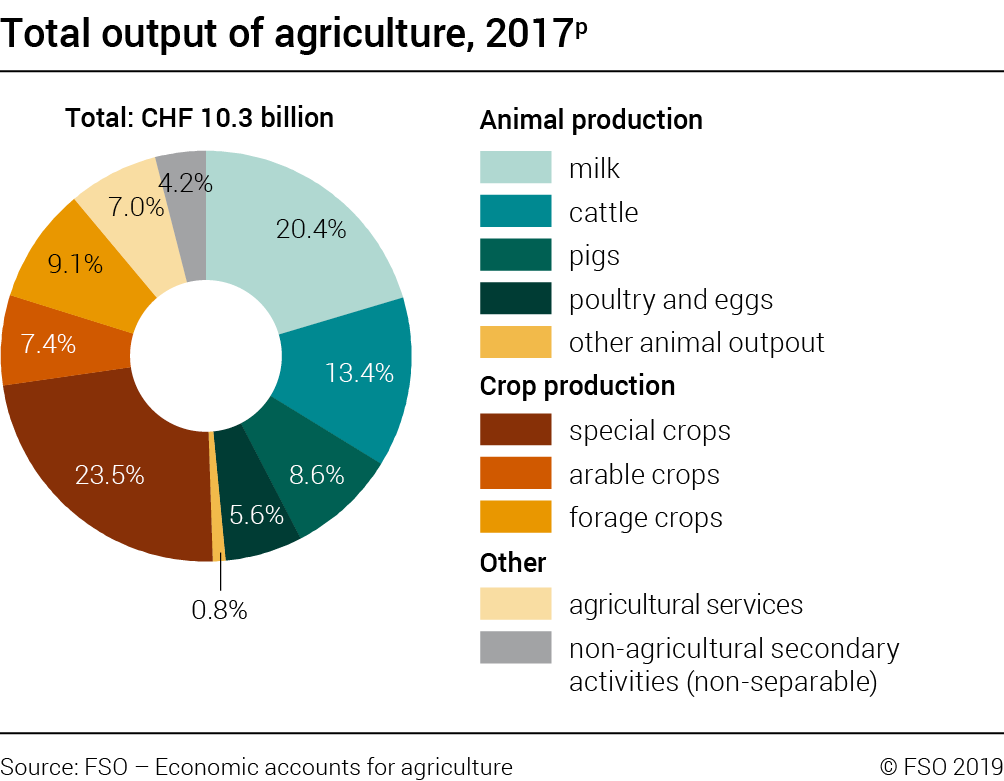
Total output of Swiss agriculture in 2017 was CHF 10.3 billion. Animal products accounted for 49% of agriculture’s production value. Milk production made up 20% (CHF 2.1 billion) of the total output. For this reason, milk revenue is one of the main income components of the Swiss agricultural sector. Of the total output value, crop production accounted for 40% while agricultural services and non-agricultural secondary activities amounted to 11%.
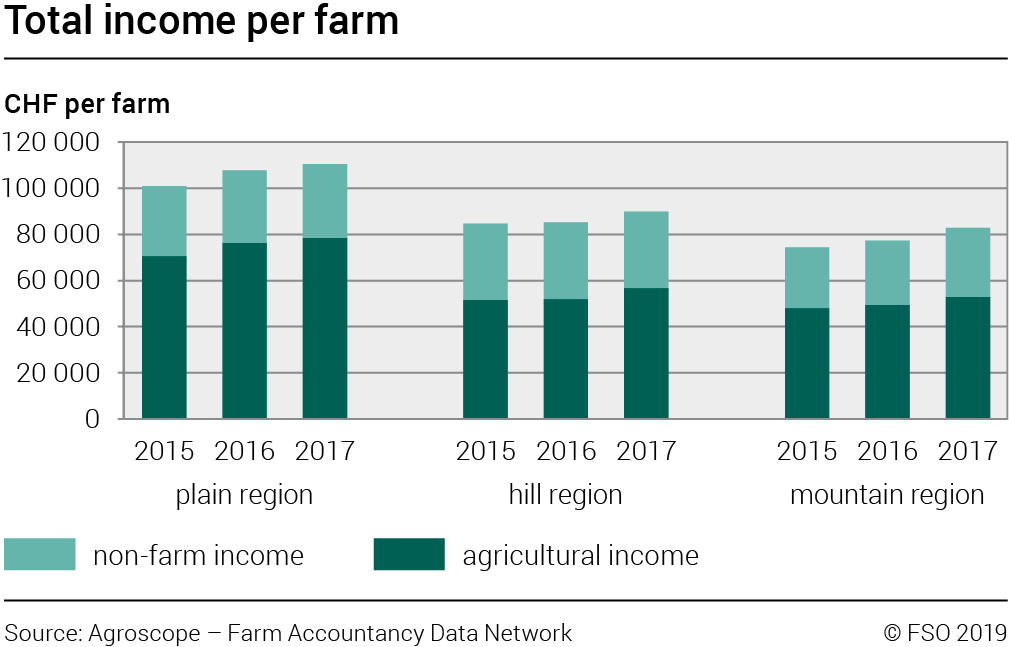
The agricultural income per farm was an average of CHF 67 800 in 2017 (6% more than in 2016). The average income per self-employed person working on a family farm was CHF 50 000. Non-farm income contributed roughly a third of total income and was therefore very important to farming families. Total income tended to be lower in hill and mountain regions than in lowland farms.